WTI vs. Brent Crude: Decoding the US and Global Oil Benchmarks
The price of crude oil is arguably the most pivotal figure in international commodity markets, acting as a barometer for global economic health, geopolitical stability, and consumer costs. When discussions turn to the "Oil Barrel Price," two names consistently dominate the conversation: West Texas Intermediate (WTI) and Brent Crude. While both represent high-quality crude oil, understanding their distinct roles as benchmarks – one primarily for the US and the other for the global stage – is crucial for anyone keen on deciphering energy markets.
These benchmarks are more than just labels; they are standardized contracts that define the quality, delivery location, and trading mechanisms for a specific grade of crude oil. They provide a transparent and liquid reference point for buyers and sellers worldwide, influencing everything from the cost of gasoline at the pump to the profitability of multinational corporations.
Understanding Crude Oil Benchmarks: Why They Matter
Crude oil is not a monolithic product; its quality varies significantly based on density (API gravity) and sulfur content. "Light" crudes are less dense and flow more easily, while "sweet" crudes have low sulfur content, making them easier and less costly to refine into high-value products like gasoline and diesel. Both WTI and Brent fall into the highly desirable "light, sweet" category, making them ideal for modern refineries.
Futures contracts for these benchmarks are traded on major exchanges, with their prices fluctuating continuously in response to real-time supply and demand dynamics. These movements reflect expectations for oil delivery in future months, offering a forward-looking view of the market.
What is WTI Crude Oil?
WTI, or West Texas Intermediate, is the definitive crude oil benchmark for the United States. Originating from oil fields across the US Gulf Coast, Midwest, and Texas, WTI is known for its exceptionally light density and very low sulfur content, making it a prime feedstock for gasoline production.
The USOIL symbol you often see on financial charts typically tracks the WTI spot price per barrel in US Dollars (USD). Its primary trading hub is the New York Mercantile Exchange (NYMEX), with physical delivery concentrated at Cushing, Oklahoma. Cushing is a critical nexus of pipelines and storage facilities, often referred to as "the pipeline crossroads of the world," and its inventory levels significantly impact WTI prices. Traders and analysts frequently monitor the
Live WTI Crude Oil Price Today: US Barrel Cost & Market Signals to gauge US energy trends and broader economic signals. A robust WTI price can signal strong US industrial activity and consumer demand, while a drop might reflect concerns about economic slowdowns or oversupply within the US market.
What is Brent Crude Oil?
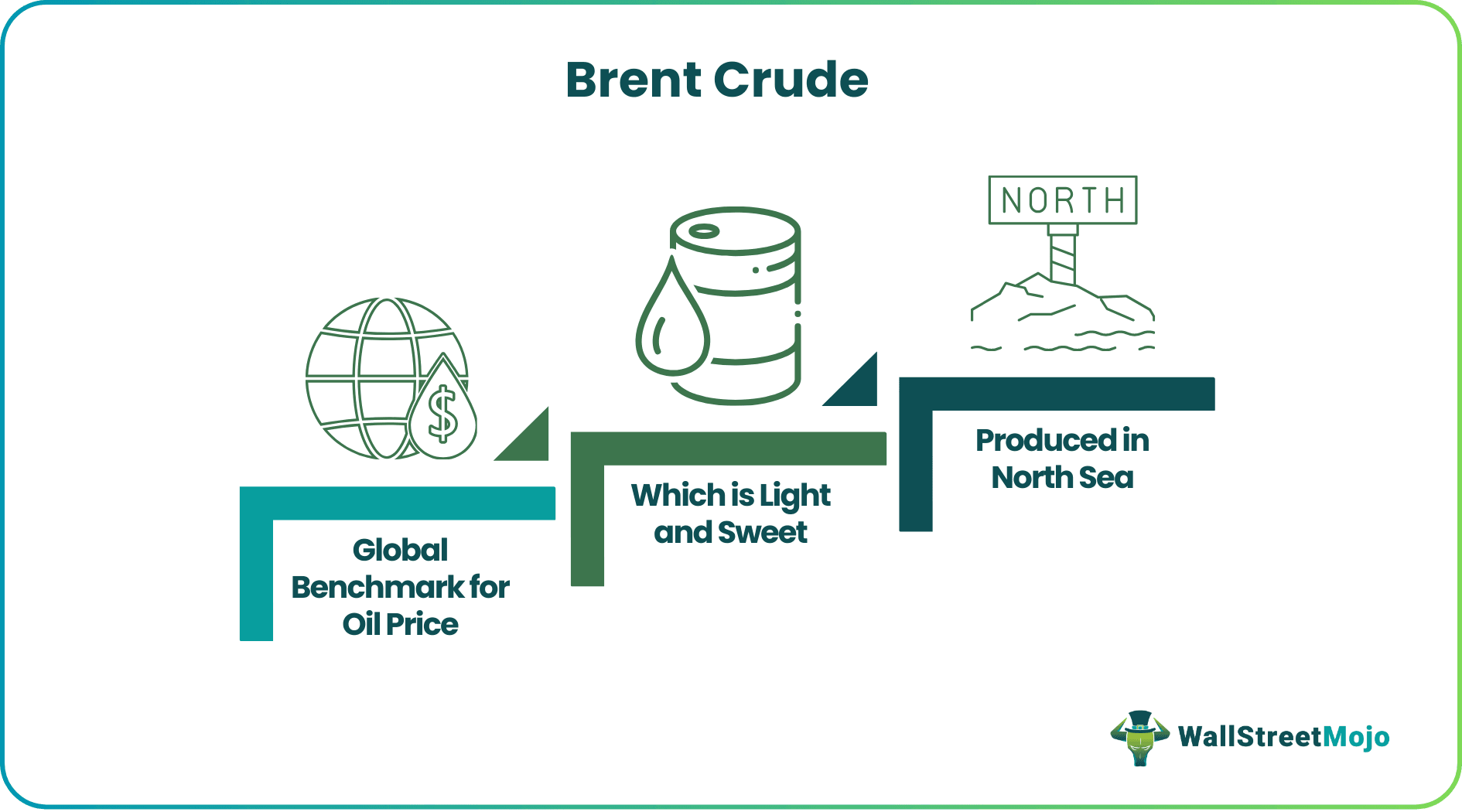
Brent Crude, named after the Brent oilfield in the North Sea, serves as the dominant international oil benchmark. Comprising a blend of crudes from various fields in the North Sea (Brent, Forties, Oseberg, and Ekofisk), it shares WTI's desirable "light, sweet" characteristics.
Traded primarily on the Intercontinental Exchange (ICE) in London, Brent's pricing influences roughly 70% of the world's crude oil transactions, making it a truly global indicator. Its origin in the North Sea provides easy access to vast shipping lanes, connecting it readily to refineries across Europe, Africa, Asia, and the Americas. This global accessibility often gives Brent a slight premium over WTI, as it reflects a wider and more diverse pool of demand and supply factors.
Key Differences: WTI vs. Brent Crude
While both are "light, sweet" crudes, their geographical origins, delivery mechanisms, and market influence create distinct pricing dynamics and roles:
*
Geographic Origin and Delivery: WTI is landlocked, primarily sourced from US domestic wells and delivered to Cushing, Oklahoma. This inland delivery point means its price can be heavily influenced by pipeline capacity, storage levels at Cushing, and regional US demand. Brent, conversely, originates from offshore North Sea fields and is readily deliverable via tanker to various global ports, providing greater logistical flexibility and global market access.
*
Market Scope: WTI acts as the primary benchmark for North American crude oil markets. Its price movements are highly indicative of US supply-demand balances, inventory levels, and refinery operations. Brent, on the other hand, is the global benchmark, reflecting the broader international energy landscape and influencing pricing for crude oil producers and consumers far beyond Europe.
*
Pricing Dynamics: Historically, Brent often trades at a premium to WTI. This "Brent-WTI spread" can widen or narrow due to several factors. For instance, an oversupply or logistical bottlenecks at Cushing can push WTI prices down relative to Brent. Conversely, strong US demand coupled with robust export infrastructure can reduce the spread or even see WTI trade at a premium. Global geopolitical tensions or supply disruptions impacting seaborne trade tend to bolster Brent's price more significantly due to its global reach.
*
Quality: Both are high-quality "light, sweet" crudes. However, WTI typically has a slightly lower density and sulfur content than Brent, making it marginally "sweeter" and "lighter" in some technical specifications. These subtle differences can affect refining costs and, subsequently, the "Oil Barrel Price."
Factors Influencing the Oil Barrel Price for Both Benchmarks
The "Oil Barrel Price" of both WTI and Brent is a complex interplay of various forces, reacting dynamically to global events and fundamental market shifts. Understanding these drivers is key to anticipating future price movements. For a detailed breakdown of these forces, refer to
What Drives Oil Prices? Supply, Demand & Global Factors Explained.
*
Supply Factors:
*
OPEC+ Production Decisions: The Organization of the Petroleum Exporting Countries (OPEC) and its allies (OPEC+) wield significant influence through production quotas and output adjustments, directly impacting global supply.
*
U.S. Shale Oil Production: The flexibility and responsiveness of US shale producers to price signals can quickly alter supply dynamics, particularly for WTI.
*
Geopolitical Events and Sanctions: Conflicts, political instability in major oil-producing regions (e.g., Middle East, Russia), and international sanctions can disrupt supply chains or remove significant volumes of oil from the market.
*
Strategic Petroleum Reserve (SPR) Releases: Governments sometimes tap into strategic reserves to stabilize markets during supply shocks, temporarily boosting supply.
*
Demand Factors:
*
Global Economic Growth: A robust global economy, particularly in emerging industrial markets like China and India, translates to higher energy consumption for transportation, manufacturing, and heating. Conversely, recession fears can significantly dampen demand expectations.
*
Seasonal Demand: Peaks in demand occur during summer driving seasons and winter heating periods, driving up the "Oil Barrel Price."
*
Refinery Capacity and Maintenance: The ability of refineries to process crude into usable products impacts demand for raw oil. Maintenance schedules can temporarily reduce demand.
*
Strength of the U.S. Dollar: Since oil is priced in USD, a stronger dollar makes oil more expensive for countries using other currencies, potentially reducing their purchasing power and demand. A weaker dollar can have the opposite effect.
*
Trader Sentiment and Speculation: Beyond fundamentals, financial market activity, including futures trading, options, and speculative positions by hedge funds, can amplify price movements based on perceived future supply/demand imbalances. Technical analysis, observing chart patterns and support/resistance levels, also plays a role in intraday trading decisions.
The Significance of Oil Barrel Price Movements
Tracking the "Oil Barrel Price" of WTI and Brent is essential not just for energy traders but for consumers, businesses, and policymakers worldwide.
*
Economic Indicator: Oil prices are a leading indicator of inflation. Higher crude costs translate into higher fuel, transportation, and manufacturing expenses, which eventually filter down to consumer goods and services.
*
Fuel Costs: The most immediate impact on consumers is seen at the gasoline pump and in heating bills. Significant price surges can strain household budgets and impact disposable income.
*
Corporate Impact: Industries heavily reliant on fuel, such as airlines, shipping, logistics, and automotive sectors, experience direct impacts on their operating costs and profitability. Oil and gas exploration and production companies, conversely, benefit from higher prices.
*
Geopolitical Influence: For oil-producing nations, the "Oil Barrel Price" directly affects national revenues, budgets, and geopolitical influence. For net importers, volatile prices can pose energy security challenges and impact trade balances.
Practical Insights for Monitoring the Oil Barrel Price:
To gain a comprehensive understanding, always consider both WTI and Brent prices. Compare their movements and observe the spread between them. This spread can reveal specific regional supply/demand imbalances (affecting WTI) versus broader global trends (affecting Brent). Stay informed on global news, economic reports, and inventory data from sources like the US Energy Information Administration (EIA) to anticipate potential shifts in the "Oil Barrel Price."
Conclusion
WTI and Brent Crude are indispensable benchmarks, each offering a distinct yet interconnected lens through which to view the global energy market. WTI provides critical insights into the robust US energy landscape, reflecting North American supply, demand, and logistical nuances. Brent, with its extensive global reach, serves as the dominant international reference, capturing broader geopolitical forces and worldwide economic trends.
For anyone monitoring the "Oil Barrel Price," understanding the unique characteristics and influencing factors of both WTI and Brent is paramount. Their combined narrative paints a complete picture of crude oil's value, reflecting the intricate balance of global supply, demand, and the myriad events that shape our world's most vital commodity. Keeping an eye on both allows for a more informed perspective on energy costs, economic indicators, and the geopolitical currents that continually reshape the global marketplace.